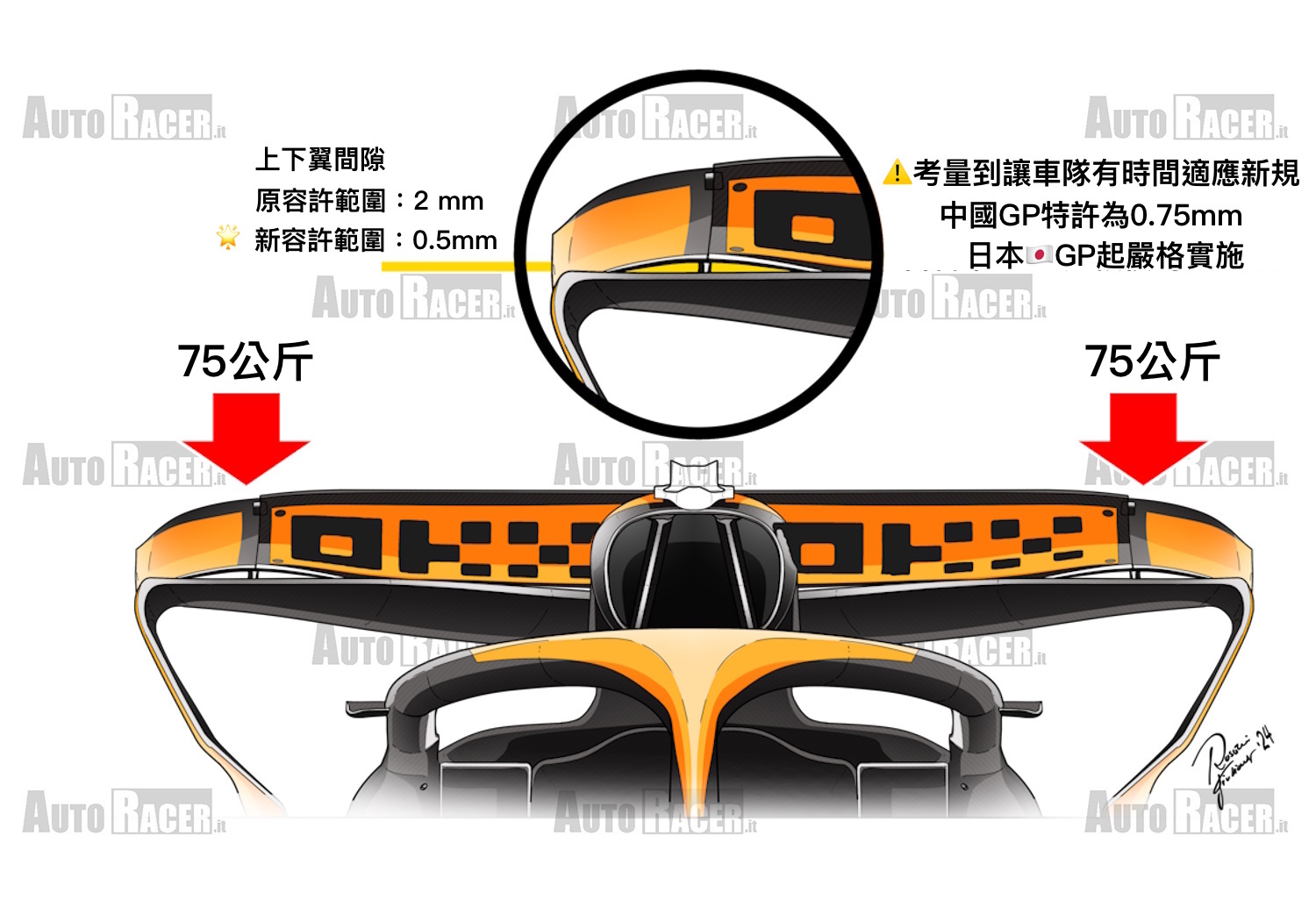

今天稍早,FIA 突然公布了新的規定,進一步限縮了尾翼的間隙,在未開啟 DRS 時,上下翼最大間隙從原本的 2 mm 縮減至 0.5mm,此規定即刻生效!
根據 FIA 的消息,新規定實施的方式是將會於靜止的車輛尾翼上施以 75 公斤的負載,上下翼最大間隙不得大於 0.5mm,但由於新規實施後距離下一場比賽 —— 中國 GP 時間緊迫,因此特許上下翼最大間隙有 0.5mm + 0.25mm 的空間,日本🇯🇵GP開始才嚴格執行不得超過 0.5mm。
與此同時相關條文部門已經著手進行《F1技術規範》(Formula 1 Technical Regulations)中的3.15.17 內文的修改:
第3章 AERODYNAMIC COMPONENTS,
第14條 Aerodynamic Component Flexibility,
第17項
Rear wing mainplane tip flexibility
第一段為
The distance between the two sections of RV-RW-PROFILES and RV-RW-TIP inboard of Y=525, must not vary more than 2mm when two loads of [0,0, -750]N each, are applied
simultaneously to the Rear Wing Profile forward most section only. The loads will be applied at [XR=330, ±525, 910]
條文當中的
not vary more than 2mm
在新版規定中會改成
not vary more than 0.5mm
🌟其實除了賽車本身,整件事情另一個有趣的點是“單位”用法。在 FIA 的聲明當中寫的是 75公斤,但在規則裡面寫的則是 750牛頓,
公斤,是質量的單位
牛頓,是力的單位
要將牛頓 (N) 轉換為公斤 (kg),需要使用重力加速度的近似值。地球上的標準重力加速度約 9.8 m/s²,因此,1 牛頓 (N) 約等於 1 kg·m/s²。
所以認真來算,
750 N ÷ 9.8 m/s² ≈ 76.53 kg
750 牛頓約等於 76.53 公斤 ⬅️這樣才對😂
不過我們還是以 FIA 官方聲明為主,幫助大家較好理解,
75 公斤就75 公斤,畢竟我們是生活頻道😆
外界推估,此規定正是朝 McLaren F1 車隊而來。
由於去年在亞塞拜然🇦🇿GP 中,McLaren F1 車隊的 MCL38 賽車無論是否在開啟 DRS 的狀態下,都能夠在速度上展現絕對的優勢,有心人士(對啦~就是各車隊的人😂)立即透過車載攝影機觀看賽車空力套件,發現MCL38 賽車尾翼的上翼片在DRS未作動下會微微翻起,其他車隊立即向 FIA 投訴,FIA 也進行關切並在規則上適時地給予回應。
今年澳洲🇦🇺GP,MCL39 賽車尾翼上翼片已不再會微微翻起,但上下翼片的間隙仍巧妙地在下壓力與阻力當中找到平衡,這使得 McLaren F1 在不開啟 DRS 的情況下依舊擁有速度優勢,特別是在彎道中,MCL39 賽車的出彎速度非常快,每個彎道建立的些微優勢,讓其他在高速路段較快的賽車也難以望其項背,FIA 也不得不再次出手。
以澳洲🇦🇺GP 來說,幾支頂級車隊的賽車DRS開啟與否的差異大約為 8%,也就是 22~24km/h 的速差( Mercedes AMG F1 約 24km/h、McLaren F1/Red Bull Racing 約 23km/h、Scuderia Ferrari 約為 22km/h),當頂級車隊在 DRS 作用下相差無幾的情況下,如果尾翼上下翼片間隙能在 DRS 未開啟下帶來些微優勢,一場比賽跑完,最終將呈現巨大的落差,而其他車隊現在想要的,正是先讓McLaren F1 的優勢不要立即擴大,特別是出彎的速度。
倘若不是下雨,澳洲🇦🇺GP 很有可能是燈滅起跑後兩輛 MCL39 即甩開對手展開“編隊飛行”,但剛結束的澳洲🇦🇺GP不僅下雨,Lando Norris 比賽中損傷底板,哪怕單圈可能因此拖慢至少 0.3 秒,最終仍能有效壓制 Max Verstappen 的攻擊,MCL39 的優勢豈止在尾翼而已,McLaren F1 還透過懸掛設計、調教與重心配置等佈局,以充足的機械抓地力彌補了減損的阻力與下壓力,不過新規實施後多少會影響 MCL39 在彎中的性能,尤其即將來到擁有 16個彎道的上賽道。
本文照片,是小麥以 AutoRacer.It 製作的圖為基礎加上中文說明,FIA 的官方聲明如下,留言區則會放上 Lando Norris 在澳洲🇦🇺GP 車載鏡頭尾翼畫面供大家參考。
喜歡McLaren F1的車迷也不要擔心,F1 獎金真的太多了,所以這些天才工程師們一定不會善罷甘休,Mini-DRS不行那就搞Tiny-DRS吧!🤣
Official statement from the FIA
As has been previously communicated, between the end of the 2024 season and the start of the 2025 season, the FIA exercised the authority it is granted under Article 3.15.1 of the Technical Regulations to introduce either new or more challenging load-deflection tests for the front wing (from Race 9, Spanish Grand Prix), the upper rear wing, and the beam rear wing. In addition, the FIA requested to the teams to use cameras in Free Practice Sessions to monitor the on-track deformations exhibited by the cars during the Australian Grand Prix.
Having analysed footage from the rear wing deformations combined to the static deflections measured inside the FIA garage in Melbourne, the FIA has concluded that sufficient grounds exist for a tougher test to be introduced from the forthcoming Chinese Grand Prix on the upper rear wing.
More specifically, Article 3.15.17, introduced in 2025, states that if 75Kg of vertical load is applied on either extremity of the rear wing mainplane, the distance between the mainplane and the flap (also known as “slot gap”) must not vary by more than 2mm. From the forthcoming Grand Prix in Shanghai, this limit will be reduced to 0.5mm. Due to the short notice for Shanghai only a tolerance of 0.25mm will be added to this new limit.
The Teams were informed of this revised test early Monday 17th of March.
The FIA wishes to further confirm that during the Melbourne event all cars tested against the requirements of Article 3.15.17 and found to comply, therefore all cars raced in Melbourne were deemed to be legal.

發佈留言